Guided anxiety journals
Two CBT-based journals written by the person behind this site, Horace Ward, for anyone who wants a daily routine to understand their anxiety and take some of the heat out of it.
A lot of the articles here talk about writing your thoughts down, catching the ones that aren't really true and trying a calmer way of looking at things. These journals give you a page to do that every day, so you don't have to start from a blank notebook.
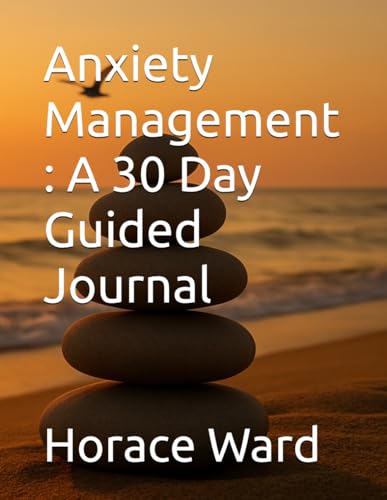
Anxiety Management: A 30 Day Guided Journal
A month of daily pages for anyone who wants a simple routine to start with. Each day gets two facing pages, split into three parts: the morning, a moment when anxiety shows up, and the evening.
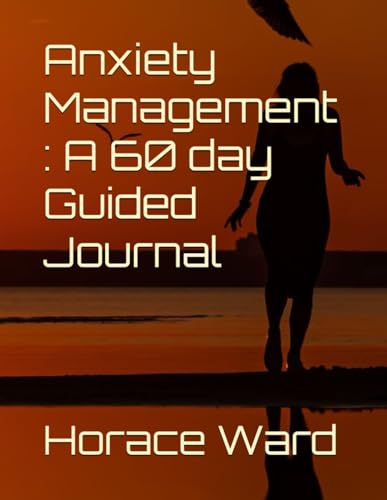
Anxiety Management: A 60 Day Guided Journal
Two months of the same daily pages, with a weekly review every seven days and a full 60-day progress review at the end, so you can look back and see what changed.
What's on each day's pages
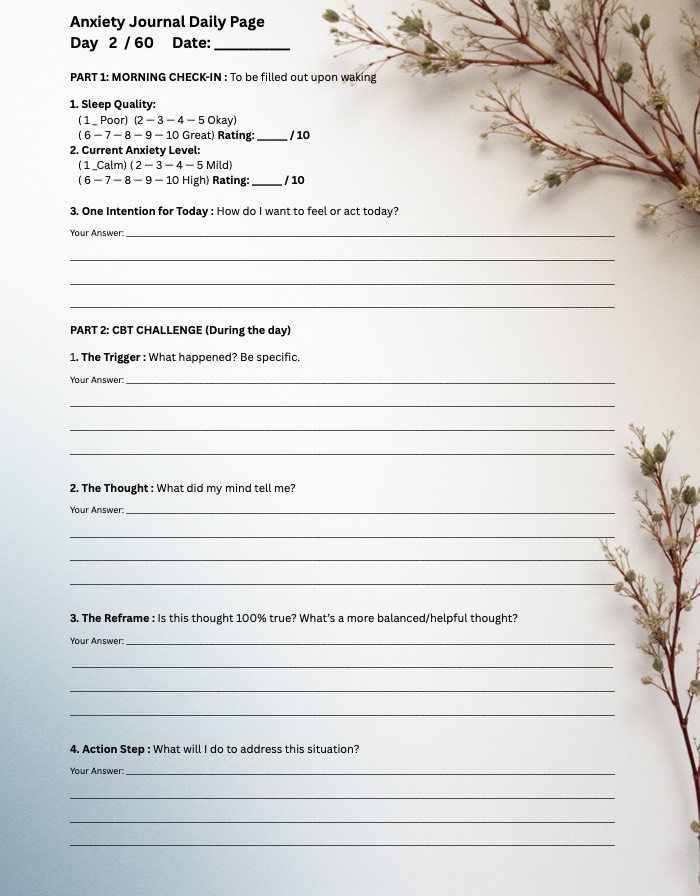
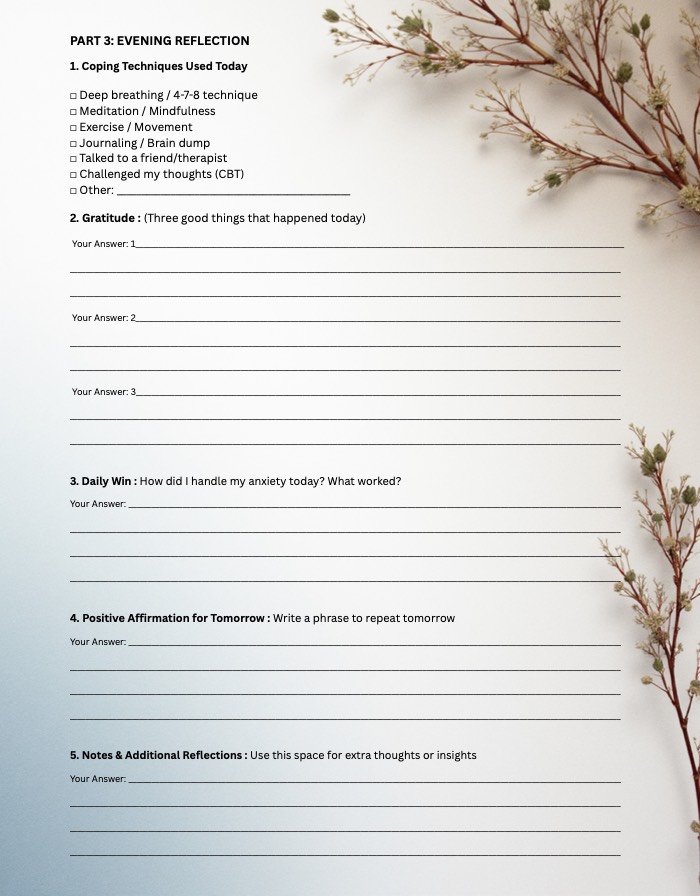
Each day takes up two facing pages, so when the journal is open in front of you the whole day is there at once. The pages are built around the CBT idea that your thoughts, feelings and behavior all feed each other, so changing one nudges the others.
- Morning check-in (left page). Rate how you slept and how anxious you feel, then set one intention for the day.
- CBT challenge (left page). When anxiety shows up, write down what triggered it, what your mind told you, whether that thought is really true and one small action step.
- Evening reflection (right page). Tick off the coping techniques you used, write down three good things from the day and how you handled your anxiety, pick an affirmation for tomorrow and jot down anything else on your mind.
There's also a weekly summary page to spot your patterns, a final progress review, a page of crisis helplines and a short FAQ on getting the most out of it.
Which one should you pick?
If you've never kept a journal before, I'd start with the 30-day one. It's a month, which is long enough to see a pattern and short enough to finish. If you already know you want a longer run, or you'd like the weekly reviews to build up into a bigger picture, the 60-day journal is the one.
A journal isn't a replacement for help
A journal can help you notice what's going on and practice some useful skills, but it can't diagnose anything or treat an anxiety disorder. If anxiety is getting in the way of your work, sleep or relationships, please talk to a doctor or a mental health professional. If you're in crisis in the US, call or text 988, or your local emergency number.
Want more on the ideas behind the journals? Try natural ways to ease anxiety, high-functioning anxiety and journaling for self-reflection.